Friday, 22 April 2016

Game Studies Year One

After reading Espen Aarseth's piece on the beginnings of game studies I feel confirmed in my stance towards games as an art form despite the majority of the points he made, in particular regarding how games differ from old media, being obvious and natural to me. This most likely because me being a new millennial and having grown up with games with them just existing like any other media despite it still being an emergent study. Also the fact that video games being the newest form of entertainment by a large margin may be part of the reason why critical study of games took a while to take hold. Games have been around commercially for nearly 40 years now and only by 2001 do we start to get a widely accepted critical study of them, and at the time of conception film and TV had an already well established critical consensus with music and literature having even more so.
Something brand new like gaming is strange especially compared to the status-quo, despite the natural progression of writing, to sound, to picture, to moving image and then encompassing all of the above and allowing an audience to interact with it. These multiple dynamics make games far more difficult to contextualize as a whole because games can be so broad. A film consists of having a narrative displayed with visuals and defined with audio. So three dynamics. Neglect in any of these aspects could sour the whole product. A film with bad writing is often considered a bad film, regardless of how good its visuals may be. Games however are slightly different as the interactive element of them may surpass this norm from old media. A game with poor writing, poor visuals and bad music may still be considered good if it is fun to play. Alternatively a game with very little interaction such as Dear Esther with excellent visuals and narrative may considered good also.
Games are ultimately the sum of their parts and one aspect may outweigh other negatives.

Wednesday, 20 April 2016

Defining Ludo-Design Dissonance In Modern Games

A hot topic among many fellow students this year has been on ludo-narrative dissonance and the multitudes of opinions regarding its relevance or lack thereof. Some feel that it is an overly analytical approach to game studies, an excuse to see deeper meaning where there is none. Asking my fellow students if they feel that ludo-narrative dissonance is something to consider in game design. The majority response was no, claiming it was either to broad in how the term can be applied to multiple instances. An argument against the term is that in most shooters you are described by the narrative as a hero yet if you want to, you can kill non-playable characters on your side. How specific an instance of this term and if it should be a term should be put under discussion by looking for defined examples of it.
For instance in Bioshock the player requires a genetic substance called Adam to progress and better themselves in combat, however the only way in the narrative to get Adam is to harvest the creatures making it, Little Sisters. Now this would create an interesting moral dilemma, does the player harvest the beings that were once innocent young girls to progress faster or do they save them and stifle their advancement. That would be the case if you were not rewarded for doing both. 
If you save three Little Sisters you will be gifted with a hamper full of Adam, just a little bit less in fact if you were to harvest three Little sisters. This ultimately defeats the point which the narrative tried to make when it introduced us to the concept of the Little Sisters. From the perspective of the story you can either be more powerful yet horrible person or you can be weaker but hold the moral high ground and this should reflect in the gameplay. But it does not. Is this intentional dissonance created to contemplate that all is not as it seems in the world of Rapture? Or is it a feature implemented by either the studio or publisher as a means to not punish players for doing the 'right' thing. In my opinion in a very adult themed game like Bioshock it should allow the player to make their own decsions and not have the game presume to teach them how to make moral decisions based on risk and reward. Especially for a game with multiple morally ambiguous ideas that Bioshock discusses. 
Despite the possibility of this being a conscious decision on Irrational Games' part, it is more likely the decision was made to improve the flow of the gameplay for a wider audience rather than to challenge the players moral fiber and innate need for progression in a game.
This is what I would describe as ludo-narrative dissonance, a jarring and noticeable clash between gameplay mechanics and important story points and the majority of examples tend to be mistakes or aspects of a game that have been overlooked rather than intentional commentary.
This is why I would like to alter the term to ludo-design dissonance or assonance. What I mean by this is how all the elements of a game fit the same tone as to have a fully immersive and engaging experience or on the flip side make aspects of different elements clash in order to send a message. A good example of ludo-design assonance would be the Metro series. Metro 2033 is set in post-apocalyptic Russia where the remainder of humanity in the region has survived by taking shelter in the Metro tunnels. The game takes place a few decades after the bombs fell where the survivors have begun to rebuild civilization within the Metro itself. Stations have become cities, halfway points villages. Not only are rival human factions agressive, the nuclear fallout has brought fourth a large range dangerous mutants creatures. Deformed rats the size of wolves, enormous gargoyle like bats and the ever-present threat of telepathic beings called the Dark Ones. The game is based on the book by Dmitry Glukhovsky and commits entirely to creating an immersive, believable bleak outlook on humanity clutching to the end of the world. The dead world above the Metro seeps into the entire aesthetic and the gameplay. Exploring dank, forgotten tunnels of the Metro require the player has to manually charge their flashlight to see or when slowed by filthy cobwebs the player has to pull out their bullet lighter and burn them away to continue. When above ground the player is at their most vulnerable and the game never lets them forget it. Because of the irradiated air the player must wear a gas mask at all times and you often only have a limited amount of filters which last for five minutes each, making the player regularly check their in game watch to make sure they have enough time to complete the level and get back underground. Harsh winds, water and sludge can be splashed onto the players mask, forcing the player to manually clean it off. Cracks in the gas mask grow and grow until it finally breaks, and doing so Artyom will gasp and splutter for breath, his vision becomes blurry until the player can find a new gas mask or dies trying. 
The games narrative also intertwines with the gameplay. Ammunition is incredibly scarce and pre-war bullets are even harder to come by, but accumulate enough and the player has a choice here. Use the more available but cheap, inaccurate rounds or when facing larger creatures switch to high grade rounds which do substantially more damage. Because ammunition is currency there is a risk versus reward here especially when playing the game on higher difficulties.
Why Metro works is because the dynamics of the game are all within the same tone. The gorgeous visuals depict a bleak and drab picture while the narrative punctuates the world with tragic characters, wishing to reminisce of the life they once had, accompanied with somber slow guitar music. The gun-play in Metro is not like a typical shooter. When the player has to fight they are cumbersome and slow, left to defend themselves with equally cumbersome weapons yet land a headshot on most human enemie and some of the smaller creatures results in an instant kill. The combat is suspenseful in how it is paced. The best approach is to stealthily creep by and enemy or entrench yourself in the safety of higher ground hiding from cover to cover. Metro treats its gameplay very realistically. Going full auto with the 'bastard gun' will result in it overheating.The inaccuracy of the makeshift firearms and highly aggressive opponents and the rarity of useful ammunition can make the game difficult and at times irritating, but this may be intentional. If the game were to have fast paced action set pieces the atmosphere would be broken.
Metro truly is an excellent example both ludo-design assonance. The tone and design of all its components is the same as the sum of all them together.

Now to look at a game that is tonally all over the place. Tom Clancy's The Division is an open world multiplayer game set in the wake of devastating virus spread throughout New York via banknotes on black Friday. The city is mostly evacuated over the winter but many civilians are left behind however they are now not only at risk of the virus as multiple gangs and hostile factions have took up arms to seize the city in its moment of weakness. To combat this threat a government organisation called the Division activates it many sleeper cells in order to neutralize the threats in the city and possibly help create a cure for the Manhattan virus. The overall tone of the narrative takes itself very seriously despite it being a compilation of many different Hollywood disaster movie cliches and themes. The setting especially invokes images of the flash freeze section of The Day After Tomorrow and the typical hazmat suits and gazebos littered around the city. This rendition of Manhattan is visually stunning, especially at night, the snow coated ground is illuminated by Christmas lights and trees, abandoned after the evacuation. On a technical level the game is a triumph, boasting some of the best high fidelity assets I have ever seen in a game. The re-creation of the city appears one to one, so much detail can be scene in every inch. 
Yet despite the gorgeous visuals there is one big glaring problem. A game with hyper realistic graphics and serious narrative would most likely have very meticulous, realistic and tactical gunplay. This is not the case as underneath the glamour and sincerity what you have is a loot driven, arcade like RPG-shooter. The combat in the game is very iterative of what you would expect from a third person shooter, snapping to cover, popping their head over to unload an entire magazine into a rioter for them to simply shrug it off and bludgeon you with a baseball bat. All the enemies in the game are effectively large sentient sponges wielding high powered rifles that lazily rush the players position, being almost self aware of how bullet absorbent they are. 
It is not unusual for a game that looks realistic to have unrealistic gameplay to an extent, look at the modern military iterations of Call of Duty, but to have such a realistic aesthetic to both the narrative and the visuals creates a huge disconnect between the player and their investment and immersion in the experience. When making a realistic game or simply a world that needs to be taken seriously, suspending the players disbelief is key. Metro does this incredibly effectively by establishing an interesting world with the history and detail within it to make it believable. When combat starts in Metro the immersion is not broken because gameplay falls in line with the tone of the visuals and narrative.
The Division's gameplay is so dissonant and unrealistic compared to the lifelike graphics that it lessens the experience for the player. In particular when facing higher level enemies that require north of thirty rifle shots to the head, despite the enemy being just a man in a hoodie. This really tests the investment of the player because the games narrative insists it should be taken seriously. All the major characters are presented with the utmost sincerity and deliver their iterative and cliched dialogue with such conviction I can not help but laugh at how absurdly uninspired it is. There was clearly a conflict of vision when developing The Division. Was is Ubisoft trying to merge genres to garner wider appeal or were the art and technical designers themselves divided? It would give the title some form of meaning at least.

So there is a example of ludo-narrative dissonance negatively affecting a game but there are examples of using this to enrich a games narrative. Spec Ops: The Line is one such game. On the surface Spec Ops nothing special. In 2012 it appeared to be just another modern military shooter. You played as a stereotypical US Sargent, Walker, alongside a stereotypical sniper, Lugo, and a stereotypical heavy weapons guy, Adams, who go into Dubai after a disastrous sandstorm has wrecked the city to search for survivors and locate the 33rd platoon who never reported back after their initial dispatch to the city. From that description the only thing interesting about it is the setting, yet in the beginning of the game it appears so drab and utterly beige. Now this sounds completely uninspired iterative of the modern military genre.
However Spec Ops: The Line is not just another bland shooter. It is a deconstruction of the entire genre, and by extension, games as a medium.
All is not as it seems, yet there is not a contrived plot twist for its own sake. Part way in you hear radio chatter of how the 33rd have been committing atrocities to the remaining survivors, and open fire on Walker and his team, mistaking them for CIA operatives. Just this alone puts Spec Ops above so many others of it genre. The United States military is almost universally considered the good guys in video games. The idea of seeing them as an enemy is intriguing and refreshing compared to middle-eastern (borderline xenophobic) depiction of enemies in other modern military shooters.
The Line continues to morally challenge its players when they are forced to intervene on the 33rd preparing to execute a CIA operative. The options are to save the innocent hostages or the agent. Both options end tragically. This begins the downward spiral into insanity. Later 33rd appears to have barricaded themselves in a container, blocking the only way forward, Walker and his squad use white phosphorous to clear the way, knowing what does to people. They were not soldiers in container. They were civilians. Walker opens the container recoils in horror of what he has done.
The game frequently behaves in this manner. It presents a clear objective, lets the player finish it, then reflects one what the player has actually done. The bland uninteresting design of the combat was a conscious decision, to lull players into a habit of shoot first, ask questions later only to subvert their expectations when they pull metaphorical rug out from under their feet to reveal that they have been tricked into becoming the true antagonist.
The commentary is everywhere. The repetitive combat is in direct contrast to the horrific tale of mental illness and war crimes and how most games of the genre choose not to, or blatantly ignore the aftermath war creates. Yet the games evolves over time. The more psychologically unhinged Walker becomes the more red colour is used in the environment and the sky. The combination of these commentaries on our depiction of the military and war in games really criticizes how the medium simply treats it like, well a game.

Archaeology of Gaming

The idea of re-hashing and re-using systems in video games is not an unfamiliar concept to me. In the increasing 'hollywood-isation' of the gaming industry and big publishers having an increasing reliance on existing franchises and remakes/re-imaginings, and going to the extent of using mostly the same assets and little new in their sequels (FarCry3-4) has been going on for years. The idea of archaeology in gaming is strange and rest on a fine line between research and a lack of innovation. Not that it is inherently bad, combining elements of different prior games to formulate something different or exciting is clearly a good business practice. My hesitance to this subject is brought forward by the way certain companies treat their franchises and even every game they make. So Ubisoft. The last time I truly respected Ubisoft as a company was after the release of FarCry Blood Dragon. It was in the wake of the excellent FarCry 3 (a project whose developers where clearly passionate about), Assassin's Creed was yet to become completely boring and Blood Dragon was a good value mini- FarCry experience with the best riff on 80's cinema and VHS I have ever scene.

The success of FarCry clearly went to Ubisofts heads. Every game they publish now seems to play the same. Be it FarCry, Assassin's Creed, Watchdogs or the Division, all have the same map, littered with the same busy work, with the same watchtowers to climb. For enthusiasts and critics this repetition has become a bore as now for any Ubisoft release you know exactly what you are getting into. Not only that but other developers are starting to take not at this continued success. Fallout 4 had a greater focus on the shooting mechanics and less on the story and at times while playing it I couldn't help but feel I was playing a FarCry game with Fallout's skin atop it.

Phemonology

My favourite games are first person games, not just for immersion but for the sense of movement. Typically for all my first person games I set my field of view very high to give myself more spacial awareness and peripheral vision but this often creates a feeling of immense speed. Games are often designed with low FOV's (around 60-70 degrees) and have a movement speed to match so at 65 FOV it feels like walking pace. However at my preferred FOV, 100-110, it feels twice as fast because the game is rendering a lot more information in any one scene. In shooters particularly I like a sense of high movement, being able to run ridiculously quick, being able to jump absurdly high and not take any fall damage. Games like Far Cry: Blood Dragon for instance takes the reasonably realistic movement and combat from Far Cry 3 and literally super charges. As tactical cyber-commando Sgt Rex Power Colt, you run faster than cars, jump over houses and dive off mountains straight into the ground and be none the worse for wear. While there is a definite disconnect between my own body an that of the characters, my eyes feel like I am hurtling forward at many miles an hour and vertigo kicks in when looking over a cliff face. So even a game as unrealistic as Blood Dragon can still elicit real world feelings.

Ludo Narrative Dissonance


After an in depth analyse of Bioshock Infinite and how it is a commentary on how iterative and repetitive games, specifically shooters are becoming and how the underlying narrative of the game being there infinite variables yet all are similar; 'Constants, and variables'. The interesting dissection from Merlin's lecture was on how the game play opposes the narratives message to ultimately complement the game and criticise the medium as a whole. Infinite is an excellent example of intentional ludo-narrative dissonance.
Dissonance between a games narrative and its gameplay are not always intentional and often come across jarring. Look at Wolfenstein The New Order, a game about shooting as many Nazis as you can with the biggest, silliest guns possible, yet as a fairly serious, emotional narrative. The narrative in itself is not bad, its quite good. It's about trying to find happiness and closure in a world of oppression and cruelty in between moments of insanity. The dissonance between the over the top, ridiculous gameplay and the earnest story makes moments of reflection and loss wither as you have just killed hundreds of soldiers (even though they are Nazis) and having fun while doing so.
The reason I feel this way about The New Order in particular is because it fashions its narrative and characters similarly to Quentin Tarantino's Inglorious Basterds but fails to see the point Tarantino made regarding Nazis in that film. The titular 'Basterds' are depicted as heroes yet they brutally murder and scalp any Nazi the come across yet in contrast all the Nazi soldiers (specifically the privates) are presented as normal human beings and not brutish monsters. The New Order treats Nazi foot soldiers as evil minions, as equally guilty as the true monsters in charge albeit with a couple of exceptions. It's this lack of foresight, coupled with the supposing thoughtful narrative that creates a harmful dissonance, souring me to the entire experience. Yet this is not enough to stop me from playing it as it is too much fun.

Gender And Intersectionality


After reading a cut of Peggy McIntosh's paper on Male and White Privilege the most obvious parallel I could draw from a game was that of Bioshock Infinite and how it displayed the views of traditional christian patriarchs in a post emancipation America. While the game definitely took it to the extreme in its themes when discussing this area as to give black and Irish workers prison like uniforms and have them apologise for their appearance on approach, in a game about time and space tears you could almost call it subtle.
The game did truly explore the nature of white privilege in depth in the character Comstock, specifically in how rationalised and viewed black people as sub-human with his phrase 'no creature in gods kingdom is born free. Except the white man.' Also the way he took Lincoln's emancipation of slaves as an insult further cemented the mind of a man believing to be entitled to white privilege. Racists thought they were cheated and stolen from after the emancipation as for decades their families had been entirely built profiting off slave labour to the point where it was the only thing that made sense. Yet Comstock created a world literally above the law with Columbia, using the belief that blinded him to manipulated the minds of his people and when this failed he resorted to propaganda and violence, an extreme interpretation of real world events.

I also watched John Berger's Way of Seeing and I really appreciated the messaged he made throughout the program of how women are represented in traditional art as objects of desire in the eyes of man and not as themselves. Clearly he was being meticulous in his choice of words at the time, this was the 1970's, to avoid commenting directly on sexism. A similar study today would like result in rather harsher language but for the most part I agreed with the points he made on the subject of nudes in art in that, a nude should be an image of the subjects self not be the object of the painters desire. This made me contemplate the nature of male privilege and the prevalence of the nude or desirable female form in both art and games. In comparison there are seemingly far less male nudes compared female nudes in art and even less, if any, male nudes making them the object of desire. The art featured in the program had some male nudes as part of some paintings but almost all of them where depicted in facing away or in a position of power. Games are also a common place to see male privilege, look at The Witcher 3. While I personally consider all the main female characters to be well developed and have genuine personality, not to mention intimate relations with any feel earned through either the players choice of the internal dialogue between Geralt and his love interests. However in a game appearing to have a generally gender neutral stance towards the importance of characters in the story, all the lead females are still very sexualised. Further still is the fact that sex scenes between Geralt and a lover often feature their complete nudity whereas Geralt will always appear with shorts on, not to mention there isn't any genitalia on his character model, ironic for how infamous his character is for sleeping around.
Knowing CD Project Red attitude as a developer though more than likely made this decision to appeal to the western market. Imagine a headline of 'Full Male Nudity in Game' probably wouldn't be good for business especially in the states where a naked penis is still a source of controversy.

Tuesday, 19 April 2016

Roles and Studios In The Industry

Level/Environment designers play a pivotal role in games development. While a concept artist may visually describe how a scene may look and feel but it is up to the level designer to selectively place assets and make sure the game flows in a way that is enjoyable. Now a game can have the best technical gameplay systems in the world but this will wear on the player if the game suffers from bad level design. Being a good level designer means being able to understand how the gameplay works and how to make it the most interesting in terms of exploration and/or excitement. Making sure that the level design compliments the gameplay and vise versa is vital to creating an engaging experience. For instance making when making an action game a level designer must be able to focus combat into specific areas and instances that will provide a player with both challenge and variety, for instance connecting long narrow areas of combat that restrict certain aspects of gameplay to large open areas that allow you to use your entire range of combat. Introduction of new verticality or puzzles can also change up the experience without actually changing the gameplay.
In games that are less action heavy then level design becomes more of aesthetics and exploration. Here good level designers will use composition techniques in the landscape/geometry of the game world to draw the players attention to points of interest or steer the player in a specific direction.

http://benno3d.blogspot.co.uk/

Sunday, 31 January 2016

Delayed/Staggered distribution


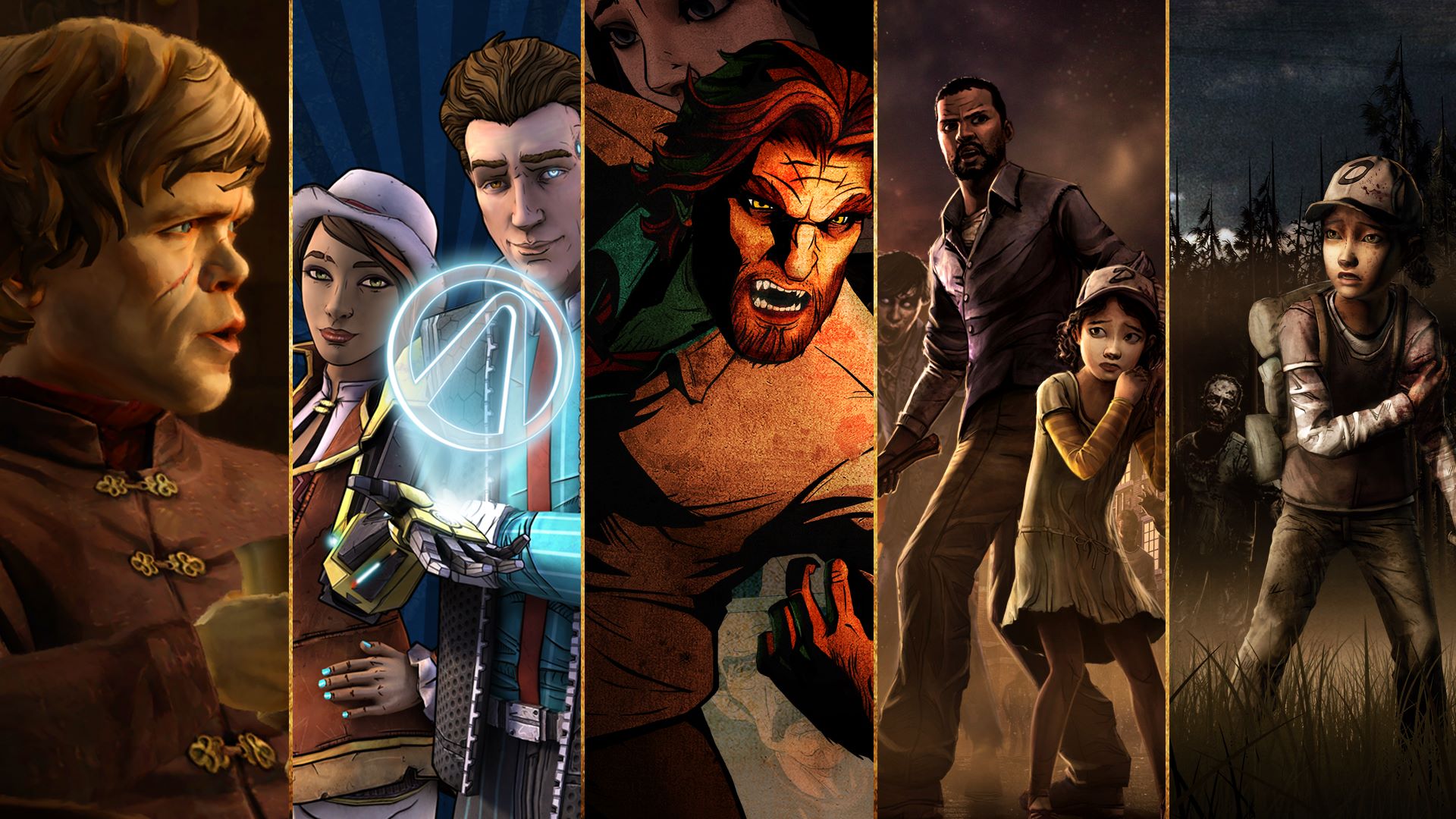
Another growing trend in industry are games with episodic release dates. Telltale games is probably the most well known studio when it comes to episodic gaming as their range of games have become the most successful and critically acclaimed in the genre. This is because Telltale design their games from the ground up to be episodic and the main advantage for the studio is that the can use the time in-between releases to address weaknesses in the previous entries in the series and take feedback from the community like in early access or open beta games but instead of gamers being able to play everything available at the time, its in short instalments. 
Another benefit from this distribution is that gradual release spreads out income so it becomes regular instead using the income from a single release.
Telltale in particular use their release model to manage multiple IP's. Last year for instance Game of Thrones and Tales From The Borderlands released in between each other.
Now for the bad stuff.
Hitman is traditionally a AAA single player game designed to be one experience start to finish, however the next game in the franchise will be released in large level expansions after the initial prologue mission. It has garnered a lot of suspicion that the developer IO Interactive had not intended this originally but Square Enix, their publisher, demanded that they release it in an episodic format after their recent success with Life is Strange. This was clear not the intention of IO and actually a result of Square Enix's predictions on how the market would change after the end of the last console generation. Square Enix were under false pretences that traditional AAA would die out in favour of mobile, online only and the PC. When the market did the exact opposite with games like the single player games like Bloodborne and The Witcher 3 selling consoles and the market generally booming, like it was going to anyway. Games like Just Cause 3 were criticised for having an odd single player when the reality of this was Square Enix pushing Avalanche for a multiplayer only experience then changing their mind after seeing. In Square Enix's mad panic to get back on track the publisher looked to episodic releases as a way to maximise profits by applying the business model to games that wouldn't originally work as episodic games. Hitman and the upcoming Final Fantasy 7 remake will both be released incrementally. Publishers changing their minds on a whim is a serious problem for developers as it can disrupt progress and can even make up to years of work useless.


  • Episodic/Staggered Release dates.
  • Telltale is the most well received and successful studio currently making Episodic games. 
  • Telltale design their games to be episodic and narrative driven.
  • They use the time in between releases to improve upon future episodes.
  • Episodic releases allows them to balance out multiple IP's within the same time frame.
  • Game of Thrones and Tales from the Borderlands.
  • The release schedule allows for regular income to back up their multiple projects.
Cons:
  • Hitman is now episodic and never was before.
  • Square Enix had bad predictions on how the market would change after the last generation of consoles ended.
  • They thought that the market would turn to mobile, online-only and PC.
  • When this didn't happen they thought episodic gaming was the future.
  • Now Square Enix is attempting to apply this model to their AAA Franchises.
  • Just Cause 3 was originally intended to be a online only game.
  • Square Enix changed their mind mid way through production making it a single player, yet retaining the DRM.
  • Hitman was also planned to be an online-only experience but is now being released in instalments.
  • This kind of behaviour is becoming increasingly common among large publishers.
  • It puts unnecessary stress and restraints on the developers.
Quotes:
  • 'It gives you more control over the pacing and the player's experience'
  • 'Another benefit is that you can change things according to the players’ feedback' Luc Baghadoust, producer of Life Is Strange


https://www.youtube.com/watch?v=VysWXsuGPHQ Information on square enix
http://www.thejimquisition.com/2016/01/why-square-enix-is-carving-its-games-to-bits-the-jimquisition/
http://gamerant.com/indie-developers-episodic-games/ 
http://www.redbull.com/uk/en/games/stories/1331743857254/life-is-strange-interview
http://www.destructoid.com/square-enix-long-console-generation-a-big-mistake--231048.phtml